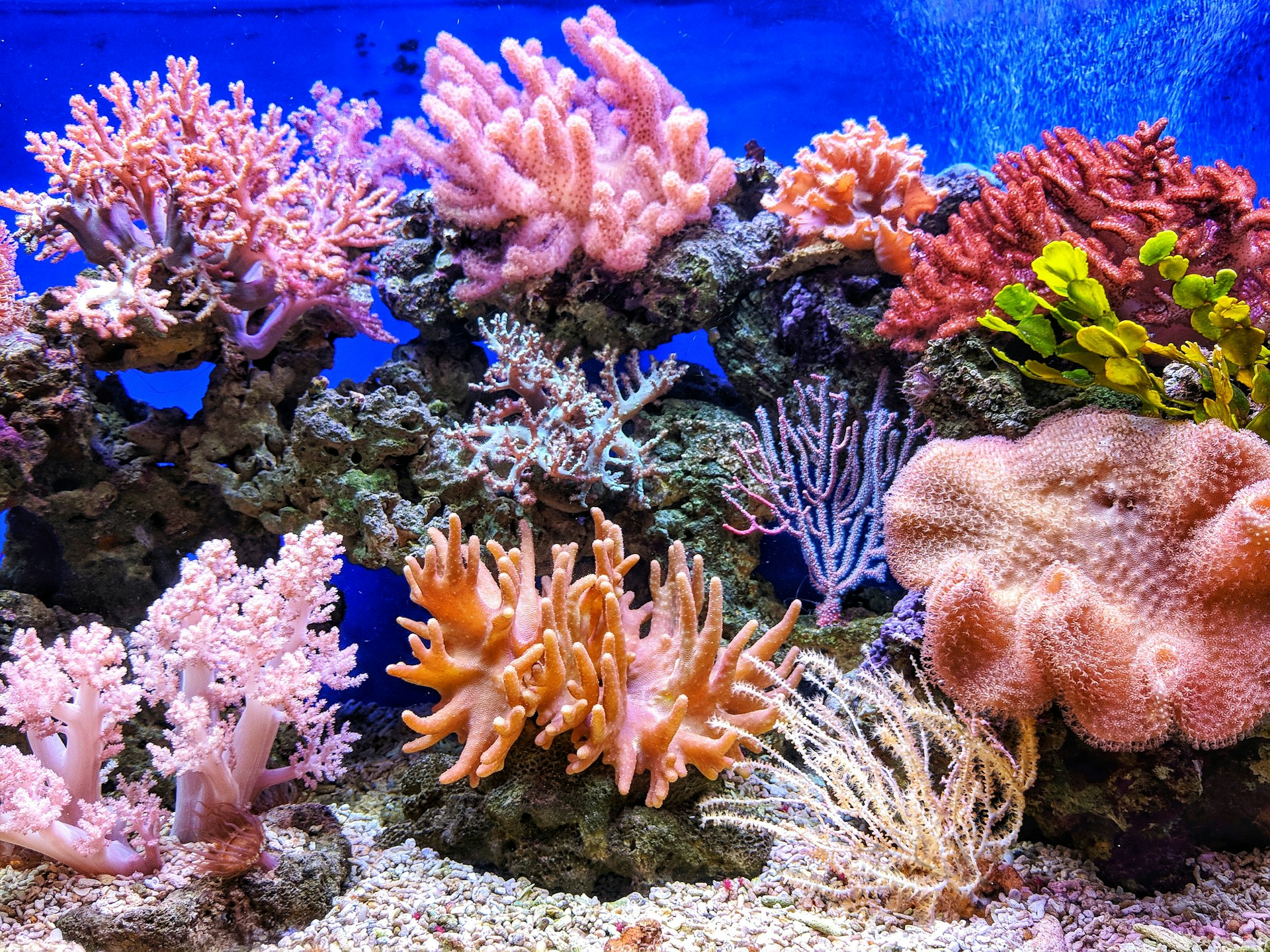
In April 2024, the National Oceanic and Atmospheric Administration confirmed what marine biologists had been tracking with growing alarm for months: the world was experiencing its fourth global mass coral bleaching event.1 The previous three events occurred in 1998, 2010, and 2014 through 2017. The intervals between them were shrinking. The severity was increasing. And the reefs that had survived earlier episodes were entering each new event in progressively worse condition, with less structural complexity, lower genetic diversity, and diminished capacity to absorb and recover from thermal stress.
The announcement was not a surprise to anyone who had been paying attention. It was a confirmation. The ocean’s thermal trajectory had been pointing toward this moment for decades, and the reefs, which respond to temperature changes with a precision that makes them among the most sensitive biological indicators on the planet, had been registering that trajectory in the only language available to them: death.
What the fourth global bleaching event revealed was not merely that coral reefs are in danger. That has been known for thirty years. What it revealed is that some reef systems have already crossed thresholds from which no recovery is possible within any timescale relevant to human civilization. The question for those systems is no longer whether they can be saved. It is what their loss means for the 500 million people and the quarter of all marine species that depend on them.
The biology of bleaching
To understand what a mass bleaching event represents, it is necessary to understand what coral actually is and how it functions.
Coral is not a single organism. It is a symbiotic system. The coral animal, a colonial organism related to jellyfish and anemones, builds a calcium carbonate skeleton that forms the physical structure of the reef. But the coral animal itself is largely colorless and, on its own, incapable of meeting its energy needs through feeding alone. It depends on a relationship with microscopic algae called zooxanthellae, which live within the coral’s tissue. These algae photosynthesize, converting sunlight into energy and providing up to 90 percent of the coral’s nutritional requirements.2 In return, the coral provides the algae with shelter, carbon dioxide, and access to sunlight. The relationship is obligate. Neither partner thrives without the other.
The colors that people associate with healthy coral reefs, the vivid blues, greens, purples, and oranges, are produced by these symbiotic algae. A healthy reef is, in visual terms, a display of billions of functioning symbiotic partnerships.
Bleaching occurs when environmental stress, most commonly elevated water temperature, disrupts this symbiosis. When water temperatures rise 1 to 2 degrees Celsius above the local maximum monthly mean and remain elevated for four to six weeks, the coral expels its zooxanthellae.3 The mechanism is a stress response. The algae, under thermal stress, begin producing reactive oxygen species that damage the coral’s tissue. The coral expels the algae as a protective measure. The result is that the coral’s white calcium carbonate skeleton becomes visible through the now-transparent tissue. The coral has not died. It has lost its primary energy source.
A bleached coral can survive for a period of weeks to months, depending on species and conditions. If water temperatures return to normal relatively quickly, the coral can reacquire zooxanthellae and recover. But recovery is not instantaneous. It takes months for the symbiosis to reestablish, and the coral is weakened during this period, more susceptible to disease, slower to grow, less able to reproduce. Full recovery of a bleached reef, meaning the restoration of coral cover, structural complexity, and biodiversity to pre-bleaching levels, requires a minimum of 10 to 15 years under favorable conditions.4
This recovery timeline is the critical variable. If bleaching events are separated by intervals longer than the recovery period, reefs can absorb the disturbance and return to something approximating their prior state. If bleaching events arrive faster than recovery allows, the reef enters a trajectory of cumulative decline. Each event removes more coral than the system can replace before the next event arrives. The reef does not recover to baseline. It recovers to a diminished state, and then is hit again.
This is precisely what has been happening.
The acceleration
The four global mass bleaching events are not evenly spaced. The first, in 1998, was triggered by a strong El Nino event and was unprecedented in recorded history. It killed an estimated 16 percent of the world’s coral in a single year.5 The second, in 2010, was less severe but demonstrated that the 1998 event was not an anomaly. The third, from 2014 to 2017, lasted three years and was the longest and most damaging on record, affecting 75 percent of the world’s reefs and killing an estimated 30 percent of coral on the Great Barrier Reef alone.6
The fourth event, confirmed in 2024, struck reefs that had not recovered from the third. The Great Barrier Reef, the largest coral reef system in the world and the most intensively studied, had experienced five mass bleaching events in the eight years between 2016 and 2024.7 Five events in eight years. The minimum recovery period is 10 to 15 years. The math is not ambiguous.
The global picture is consistent with the Australian data. Approximately 50 percent of the world’s coral reef cover has been lost since the 1950s.8 The Caribbean has been hit particularly hard, losing an estimated 80 percent of its coral cover since the 1970s.9 The decline is not uniform; some reef systems are more resilient than others, and local factors such as water quality, sedimentation, and fishing pressure interact with thermal stress to produce varying outcomes. But the direction is uniform. Every major reef system on the planet is in decline, and the rate of decline is accelerating.
The thermal threshold that triggers bleaching, 1 to 2 degrees Celsius above local maximum monthly mean temperatures, is not a high bar. Global ocean temperatures have already risen approximately 0.9 degrees Celsius above pre-industrial levels, and the rate of ocean warming is increasing.10 The 2023 to 2024 period saw ocean surface temperatures reach levels that shattered previous records, driven by the combination of long-term warming trends and a strong El Nino event. Marine heat waves, defined as periods of anomalously warm ocean temperatures, have increased in frequency by 34 percent and in duration by 17 percent since 1925.11
The projections are stark. At 1.5 degrees Celsius of global warming above pre-industrial levels, an estimated 70 to 90 percent of the world’s coral reefs will be lost. At 2 degrees, the loss rises to 99 percent.12 The world is currently on a trajectory toward approximately 2.5 to 3 degrees of warming by the end of the century, based on current policies and pledges. Under those scenarios, the question of whether coral reefs will survive in anything resembling their current form has already been answered. They will not.
The phase shift
The loss of coral reef cover is not simply a reduction in the quantity of coral. It is a qualitative transformation of the entire ecosystem. Marine ecologists describe this transformation as a “phase shift,” a term borrowed from physics to describe a system that has moved from one stable state to another.
A healthy coral reef is dominated by hard corals, the reef-building species that create the three-dimensional structure of the ecosystem. This structure provides habitat for an extraordinary diversity of organisms. Coral reefs cover less than 1 percent of the ocean floor but support approximately 25 percent of all marine species.13 The structure creates niches: crevices for small fish to hide from predators, surfaces for invertebrates to attach to, channels that direct water flow and concentrate nutrients. Remove the structure, and you remove the habitat. Remove the habitat, and you remove the species that depend on it.
When coral dies and is not replaced, the reef does not simply become an empty coral skeleton. It is colonized by algae, particularly fleshy macroalgae and turf algae that grow rapidly and, in the absence of healthy coral, come to dominate the substrate. This is the phase shift: from a coral-dominated state to an algae-dominated state. The two states are self-reinforcing. Healthy coral suppresses algal growth through competition for space and light. Herbivorous fish that graze on algae depend on the reef structure for shelter. When coral declines, algae expand. When algae expand, they further suppress coral recruitment by covering the surfaces on which coral larvae need to settle. The herbivorous fish that would control algal growth lose their habitat and decline. The system locks into its new state.
The algae-dominated reef is not a reef in any functional sense. It lacks the structural complexity that supports biodiversity. It does not provide the same fisheries productivity, the same coastal protection, or the same capacity for carbon cycling. It is, ecologically speaking, a different ecosystem operating under different rules. And the transition, once it has occurred, is extremely difficult to reverse because the feedback loops that maintain the algal state are self-reinforcing.
Research on Caribbean reefs, which have been undergoing this phase shift since the 1970s, demonstrates how persistent the algae-dominated state can be. Despite decades of conservation efforts, including the establishment of marine protected areas, fishing restrictions, and water quality improvements, most Caribbean reefs have not returned to coral-dominated states.14 The phase shift, once completed, appears to be stable on timescales of decades to centuries.
The cascade of consequences
The ecological consequences of coral reef loss extend far beyond the reefs themselves. Reef fish populations decline by 50 to 80 percent within five years of significant coral loss, as species that depend on the reef structure for feeding, shelter, and reproduction lose their habitat.15 This decline cascades through marine food webs, affecting pelagic species that feed on reef-associated organisms, seabird populations that depend on reef fish, and the broader coastal ecosystem.
The economic consequences are proportional to the ecological ones. The global economic value of coral reefs has been estimated at approximately $375 billion per year, encompassing fisheries, tourism, coastal protection, and pharmaceutical potential.16 This figure, while large, almost certainly understates the true value because it does not fully capture the non-market services that reefs provide: the protein that subsistence fishing communities depend on, the storm surge reduction that protects coastal infrastructure, the cultural and spiritual significance of reefs to indigenous and coastal communities.
Approximately 500 million people worldwide depend directly on coral reefs for food, income, and coastal protection.17 For many of these communities, particularly in Southeast Asia, the Pacific Islands, and the Caribbean, there is no substitute. The reef fishery is not one option among many. It is the primary source of animal protein and the primary source of livelihood. When the reef degrades, the fishery degrades. When the fishery degrades, the community faces food insecurity and economic collapse. The alternatives, importing food, transitioning to other economic activities, migrating, are theoretically available but practically constrained by poverty, geography, and the scale of the disruption.
Coastal protection is another service that is difficult to replace. Healthy coral reefs dissipate up to 97 percent of wave energy before it reaches the shore.18 This natural breakwater effect protects coastal communities, infrastructure, and ecosystems from storm damage, erosion, and flooding. The equivalent engineered protection, seawalls, breakwaters, and other hard infrastructure, is estimated to cost tens of billions of dollars globally and requires continuous maintenance. For many of the nations most dependent on reef-based coastal protection, particularly small island developing states, the cost of engineered alternatives exceeds their entire national budgets.
The loss of reef-based coastal protection is particularly consequential in the context of sea level rise. As sea levels increase, the protective function of reefs becomes more, not less, important. The simultaneous loss of reef structure and rise in sea level represents a compounding threat: higher water levels and reduced wave dissipation combine to dramatically increase coastal flooding risk. Research published in Nature Communications estimated that without coral reefs, flood damage to coastal infrastructure would double, and the costs of flooding would increase by $4 billion per year in the United States alone.19
The limits of intervention
The conservation response to coral reef decline has been substantial in effort and limited in effect. Marine protected areas, water quality regulations, fishing restrictions, coral gardening programs, assisted gene flow, and reef restoration projects have been implemented across the globe. Some of these interventions have produced measurable local benefits. Well-managed marine protected areas can increase fish biomass and maintain higher coral cover than unprotected areas. Coral gardening, the practice of growing coral fragments in nurseries and transplanting them onto degraded reefs, has shown success at small scales.
But none of these interventions address the primary driver of reef decline: ocean warming. A marine protected area cannot lower water temperature. A fishing restriction cannot prevent a bleaching event. Coral gardening cannot keep pace with the rate of coral loss during a mass bleaching event that affects thousands of square kilometers simultaneously. The interventions are valuable in the sense that they buy time and maintain local resilience, but they are operating within a system whose fundamental trajectory is determined by a variable they cannot control.
This is the central paradox of coral reef conservation in the current era. The tools available to reef managers are local. The threat is global. Reducing sedimentation, controlling nutrient runoff, managing fishing pressure, and restoring degraded areas are all worthwhile actions that improve reef condition and resilience. But they cannot compensate for the thermal stress imposed by a warming ocean. A reef in pristine water quality, with no fishing pressure, no sedimentation, and no local stressors, will still bleach and die if the water temperature exceeds the bleaching threshold for long enough. And that threshold is being exceeded with increasing frequency and duration.
Some researchers have proposed more aggressive interventions: assisted evolution, in which corals are selectively bred for thermal tolerance; the introduction of heat-resistant symbiotic algae; shading or cooling technologies that reduce water temperatures locally; and even proposals for marine cloud brightening, in which aerosols are sprayed into the atmosphere to increase cloud reflectivity over reef areas. These approaches are in various stages of research and development. Some show promise in laboratory settings. None have been demonstrated at the scale necessary to protect reef systems that span thousands of kilometers.
The honest assessment, stated plainly, is that the survival of coral reef ecosystems in anything resembling their current form depends almost entirely on whether humanity limits global warming to 1.5 degrees Celsius above pre-industrial levels. At that threshold, 70 to 90 percent of reefs are projected to be lost, but some would survive, potentially providing the biological foundation for eventual recovery over centuries. Above that threshold, the losses approach totality.
The world is not currently on a trajectory to meet the 1.5-degree target. It is not close.
What the reefs are telling us
Coral reefs are often described as the “canaries in the coal mine” of climate change. The metaphor is apt in one respect: reefs are among the first major ecosystems to show unmistakable, large-scale decline as a direct consequence of warming. But the metaphor is also incomplete, because a canary in a coal mine is a warning. It tells the miners to leave. The reefs are telling us something, but we are not leaving. We are not even slowing down.
What the reefs are actually demonstrating is what a tipping point looks like in practice. Not as a theoretical concept, not as a line on a graph, but as a lived, observable, irreversible transformation of a system that took thousands of years to build and is being dismantled in decades. The reefs show us that tipping points are not dramatic, sudden events. They are processes. They unfold over years and decades, through a series of disturbances, each one reducing the system’s capacity to absorb the next, until the cumulative damage exceeds the system’s capacity for recovery.
The reefs also show us that tipping points are not symmetrical. The time required to build a coral reef is measured in centuries to millennia. The time required to destroy one is measured in years to decades. The time required to recover, if recovery is possible at all, is measured in centuries. This asymmetry is fundamental. It means that the consequences of crossing a tipping point are not temporary. They are, for all practical purposes, permanent on any timescale that matters to the people and species affected.
This asymmetry applies to other systems as well. The Greenland and West Antarctic ice sheets, the Amazon rainforest, the Atlantic meridional overturning circulation, the permafrost carbon stores: these systems share the property that their degradation, once initiated, proceeds through self-reinforcing feedbacks that are extremely difficult to reverse. The coral reefs are simply further along the trajectory because their thermal sensitivity means they respond to warming earlier and more visibly than these other systems.
The reefs are not an isolated case. They are the leading edge.
The question of value
There is a tendency, in discussions of environmental loss, to quantify the value of what is being lost in economic terms. The $375 billion annual value of coral reefs. The fisheries that feed 500 million people. The coastal protection equivalent to billions of dollars in engineered infrastructure. These figures are useful because they demonstrate that reef loss is not an abstract environmental concern but a concrete economic and humanitarian one. They provide a language that policymakers understand and that can be incorporated into cost-benefit analyses.
But the economic framing, while necessary, is also insufficient. It implies that the appropriate response to reef loss is to weigh the costs of preventing it against the costs of allowing it, and to choose the option with the better ratio. This framing treats coral reefs as assets whose value can be measured in currency and whose loss can be compensated through substitution. It assumes that if the coastal protection function of a reef can be replaced by a seawall, and if the fishery can be replaced by aquaculture, and if the tourism can be replaced by some other form of economic activity, then the loss of the reef is, in net terms, manageable.
This assumption is wrong in at least two ways. First, the substitution costs are far higher than the economic framing suggests, because the services provided by reefs are provided simultaneously, continuously, and without maintenance costs. A seawall provides coastal protection but not fisheries, not biodiversity, not carbon cycling, not tourism. Replacing the full suite of services provided by a coral reef requires replacing each service individually, at costs that are additive and ongoing. The total cost of full substitution would dwarf the estimated annual value of the reefs themselves.
Second, some of what is lost when a reef dies cannot be substituted at any cost. A coral reef that took 5,000 years to develop represents an accumulation of biological complexity that cannot be reconstructed by human effort within any relevant timescale. The species assemblages, the genetic diversity, the ecological relationships, the evolutionary adaptations to local conditions: these are the product of millennia of biological processes that cannot be accelerated or replicated. When they are gone, they are gone.
The economic framing is necessary for policy discussions. But it should not be mistaken for a complete accounting of what is at stake.
The direction from here
The fourth global mass bleaching event is not the last. It is, based on current warming trajectories, the beginning of a period in which bleaching becomes not episodic but chronic, not exceptional but normal. The question is not whether more coral will be lost. It is how much of what remains can be preserved through the bottleneck of the next several decades, and whether the conditions for eventual recovery can be created.
The answer depends on two things. The first is the trajectory of global greenhouse gas emissions. Every fraction of a degree of warming matters for coral reefs. The difference between 1.5 degrees and 2 degrees of warming is the difference between losing most reefs and losing nearly all of them. The argument for rapid emissions reductions is, among many other things, an argument for preserving the biological foundation from which reef ecosystems could eventually recover.
The second is the protection and management of reef systems that show the greatest resilience. Not all reefs are equally vulnerable. Some exist in locations with naturally variable temperatures, which may have selected for more thermally tolerant coral populations. Some are in areas with strong upwelling that periodically delivers cooler water. Some have higher genetic diversity or different species compositions that confer greater resilience. Identifying, protecting, and connecting these refugia is a priority because they represent the reservoirs from which future recovery, if it occurs, will draw.
Neither of these actions will prevent further loss. The warming already embedded in the climate system guarantees additional bleaching events, additional coral mortality, and additional phase shifts to algae-dominated states. The choices available are not between saving the reefs and losing them. They are between preserving enough of the biological foundation to allow recovery over centuries and losing that foundation entirely.
The coral reefs have crossed a tipping point. Some of what has been lost will not return within any timescale that matters to the people alive today, or to their children, or to their grandchildren. The question now is whether the tipping point for the remaining reefs can be avoided, and whether the systems that have not yet shifted can be given the time they need.
That question will be answered not by marine biologists or reef managers or conservation organizations. It will be answered by the trajectory of global emissions, which is to say, by the collective decisions of every government, every industry, and every individual whose actions contribute to the concentration of greenhouse gases in the atmosphere.
The reefs are not waiting for those decisions. They are responding to the decisions already made.
Footnotes
-
National Oceanic and Atmospheric Administration, Coral Reef Watch, “NOAA Confirms 4th Global Coral Bleaching Event,” April 15, 2024. ↩
-
Muscatine, L., “The Role of Symbiotic Algae in Carbon and Energy Flux in Reef Corals,” Coral Reefs 25 (1990): 1-29. ↩
-
Hoegh-Guldberg, O., “Climate Change, Coral Bleaching and the Future of the World’s Coral Reefs,” Marine and Freshwater Research 50, no. 8 (1999): 839-866. ↩
-
Gilmour, J.P., et al., “Recovery of an Isolated Coral Reef System Following Severe Disturbance,” Science 340, no. 6128 (2013): 69-71. ↩
-
Wilkinson, C., ed., Status of Coral Reefs of the World: 2008 (Global Coral Reef Monitoring Network, 2008). ↩
-
Hughes, T.P., et al., “Global Warming and Recurrent Mass Bleaching of Corals,” Nature 543 (2017): 373-377. ↩
-
Australian Institute of Marine Science, “Reef Condition Reports,” 2016-2024; Great Barrier Reef Marine Park Authority, Mass Bleaching Event Records. ↩
-
Eddy, T.D., et al., “Global Decline in Capacity of Coral Reefs to Provide Ecosystem Services,” One Earth 4, no. 9 (2021): 1278-1285. ↩
-
Gardner, T.A., et al., “Long-Term Region-Wide Declines in Caribbean Corals,” Science 301, no. 5635 (2003): 958-960. ↩
-
IPCC, “Ocean and Cryosphere in a Changing Climate,” Special Report (2019). ↩
-
Oliver, E.C.J., et al., “Longer and More Frequent Marine Heatwaves over the Past Century,” Nature Communications 9, no. 1324 (2018). ↩
-
IPCC, “Global Warming of 1.5 Degrees C,” Special Report (2018), Chapter 3. ↩
-
Fisher, R., et al., “Species Richness on Coral Reefs and the Pursuit of Convergent Global Estimates,” Current Biology 25, no. 4 (2015): 500-505. ↩
-
Jackson, J.B.C., et al., Status and Trends of Caribbean Coral Reefs: 1970-2012 (Global Coral Reef Monitoring Network, 2014). ↩
-
Wilson, S.K., et al., “Multiple Disturbances and the Global Degradation of Coral Reefs: Are Reef Fishes at Risk or Resilient?” Global Change Biology 12, no. 11 (2006): 2220-2234. ↩
-
Cesar, H., Burke, L., and Pet-Soede, L., The Economics of Worldwide Coral Reef Degradation (Cesar Environmental Economics Consulting, 2003). ↩
-
Wilkinson, C., ed., Status of Coral Reefs of the World: 2008 (Global Coral Reef Monitoring Network, 2008). ↩
-
Ferrario, F., et al., “The Effectiveness of Coral Reefs for Coastal Hazard Risk Reduction and Adaptation,” Nature Communications 5 (2014): 3794. ↩
-
Beck, M.W., et al., “The Global Flood Protection Savings Provided by Coral Reefs,” Nature Communications 9 (2018): 2186. ↩